The Essential Sanātana-dharma - Supreme Spirit

Supreme Spirit

We now come to the all-pervading Supreme Spirit (known as ‘Brahman’) defined in the Hindu texts. Brahman[1] is beyond creation and dissolution. It is beyond thought, form, and attributes. Brahman is the highest reality. The Vedas mention that the idea of ‘god’ is subsequent to creation[2], thus making a clear distinction between god(s) and Brahman. Hinduism has many deities but only one Supreme Being.[3]

Brahman includes all of creation and is inclusive in every sense.[4] This all-encompassing idea of Divinity naturally makes a Hindu accept the whole world with all its myriad manifestations. Respect for nature – mountains, rivers, minerals, forests, soil, animals, birds, insects, and so on – is ingrained in the Hindu mind. Everything is imbued with divinity, and the whole of creation is seen as sacred. Not having reverence or gratitude is seen as profane.

While Brahman transcends definition, the Vedānta school describes it as sat-cit-ānanda, which we have seen earlier as an attribute of the Self. There is no distinction between the true Self and Brahman—knowing, experiencing, and being Brahman is one and the same.[5] If one negates Brahman, clearly one is negating everything including oneself![6] It is said that the power of Brahman supports the universe[7] but Brahman cannot flourish in the human world without dharma, which is the ultimate support.[8]

The fundamental nature of the material universe is Name (nāma) and Form (rūpa) just as the fundamental nature of Brahman is sat-cit-ānanda. These five—name, form, existence, awareness, and bliss—are grouped together as the basic elements.[9] While nāma-rūpa are ephemeral, sat-cit-ānanda are eternal.

Brahman is all-pervading but it appears in myriad ways because of the distinction of name and form.[10] The whole universe is an appearance of Brahman. It is like bubbles, droplets, and waves arising on the surface of ocean and then merging into it.[11]

While the universal experience of sat-cit-ānanda represents Absoluteness, mithyā represent Relativity. What is true at one level becomes false in the face of a higher level of reality. For instance, the ground on which we stand is flat—and to the extent it is real. But when we see it at the level of the earth, we know that it is curved, for the planet is a globe, not a flat land. The highest level of reality is the Brahman and everything else is relative.

Māyā is the power of sat-cit-ānanda that creates the distinctions of nāma and rūpa. It is the mechanism by which the Brahman appears as the universe. Māyā is an asset for Brahman whereas it is a liability for the individual (as avidyā, Primordial Ignorance).

Māyā represents the nature of indescribability of the universe. Our constant quest should be to come out of the clutches of māyā and realize the Self.

The single-syllable mantra* representing Brahman is Om, the most sacred sound in Hinduism.[12] Om has four parts: ‘a,’ ‘u,’ ‘m,’ and silence; ‘a’ represents birth, ‘u’ – growth, ‘m’ – letting go, and silence represents immortality. Also, ‘a,’ ‘u,’ and ‘m’ represent the three states of consciousness (wakeful, dream, and deep sleep) and the silence represents the all-pervading state of knowing one’s true Self.[13] Om is chanted as part of rituals and during meditation.

Now we can come to the Hindu conception of god. We have several deities but they can be reduced to the trio of Brahmā, Viṣṇu, and Maheśvara (śiva), who are inseparable from their śaktis – Sarasvatī, Pārvatī, and Lakṣmī respectively.[14]

Brahmā is associated with creation, Viṣṇu with sustenance, and Maheśvara with dissolution.

The Vedic deity Prajāpati became Brahmā of the Purāṇas. Similarly, Indra, Sūrya, Bhaga, Parjanya, Savitṛ, and Pūṣan were united in Viṣṇu; Rudra, Agni, Soma, Varuṇa, Marut, and īśāna were absorbed in śiva; Brahmaṇaspati became Gaṇapati; Aditi, Uṣas, Vāk, Sarasvatī merged into śakti. Even the latter-day deities like Māriamma were identified with śakti.[15]

There is no fundamental difference between the Vedic and Purāṇic deities—the former merged with the latter; although there may be some differences in names, forms, and functions, the spirit behind them remains unchanged.

The sense of imbuing the whole of creation with divinity manifested in the deification of the forces of nature (sky, rain, thunder, lightning, mountains, oceans, rivers, fire, wind, earth), animate beings (trees, plants, animals, birds), as well as space (the guardians of the directions[16]) and time (sun, moon).

Viṣṇu (‘the expansive one’[17]) represents space and Maheśvara (also known as Mahākāla and Kālakāla) represents time; Brahmā represents matter and śakti represents energy.[18]

Natural phenomena, the innumerable animate and inanimate beings, and all aspects of life were deified—and seen as an integral part of the Supreme.

We have seen the link between macrocosm and microcosm in the Vedas. The same idea is presented poetically in the Bhagavad-gītā and other works. The macrocosm is represented by the idea ‘Brahman is all-pervasive’[19] and that the Supreme pervades everything.[20] The microcosm is represented by the idea ‘I am Brahman[21] and that the universe is part of the Supreme.[22]

Thus, the Hindu conception of the divine equips a Hindu to invoke the Supreme in every aspect of his life and see the whole world as a manifestation of the Supreme.[23] This ultimately should lead to realizing the Supreme in oneself.


[1] Brahman comes from the word-root √bṛh–vṛddhau meaning ‘to grow,’ ‘to prosper.’ Thus the word Brahman indicates expanse, greatness, loftiness, and the highest.

[2] ko addhā veda ka iha pra vocat kuta ājātā kuta iyaṃ visṛṣṭiḥ

arvāg-devā asya visarjanenāthā ko veda yata ābabhūva—Ṛg-veda-saṃhitā 10.129.6

[3] indraṃ mitraṃ varuṇam-agnim-āhur-

atho divyaḥ sa suparṇo garutmān

ekaṃ sad-viprā bahudhā vadanti

agniṃ yamaṃ mātariśvānam-āhuḥ॥       —Ṛg-veda-saṃhitā 1.164.46

[4] sarvaṃ khalv-idaṃ brahma tajjalān-iti śānta upāsīta

atha khalu kratumayaḥ puruṣo yathā-kratur-asmi loke

puruṣo bhavati tathetaḥ pretya bhavati sa kratuṃ kurvīta—Chāndogyopaniṣad 3.14.1

[5] sa yo ha vai tat paramaṃ brahma veda brahmaiva bhavati, nāsyābrahmavit-kule bhavati tarati śokaṃ tarati pāpmānaṃ guhā-granthibhyo vimukto’mṛto bhavati॥—Muṇḍakopaniṣad 3.2.9

Also see īśāvāsyopaniṣad 16 (“yo’sāvasau puruṣaḥ so’ham-asmi”) and Bṛhadāraṇyakopaniṣad 4.4.7 (“atha martyo’mṛto bhavaty-atra brahma samaśnuta… athāyam-aśarīro’mṛtaḥ prāṇo brahmaiva teja eva, so’haṃ…”)

[6] See Bṛhadāraṇyakopaniṣad 3.9.25

[7] Taittirīya-brāhmaṇa 2.8.9.7 (“…brahmādhyatiṣṭhad-bhuvanāni dhārayan”)

[8] Bṛhadāraṇyakopaniṣad 1.4.14 (“sa naiva vyabhavat, tacchreyorūpam-atyasṛjata dharmaṃ”)

[9] asti bhāti priyaṃ rūpam nāma cety-aṃśa-pañcakam

ādya-trayaṃ brahma-rūpam jagad-rūpam tato dvayam॥ —Sarasvatī-rahasyopaniṣad 58 (also Dṛg-dṛśya-viveka 20)


[10] See Śatapatha-brāhmaṇa 11.2.3.3 and Chāndogyopaniṣad 6.3.2, 3 for a discussion about Brahman entering the universe by means of nāma and rūpa.

[11] This is the Brahma-vivarta-vāda (Theory of Appearance) of the Advaita-vedānta school of philosophy, according to which the Ultimate Cause appears as a multitude of effects.

[12] See Bhagavad-gītā 8.13 (“om ity-ekākṣaraṃ brahma…”)

[13] See Māṇḍūkyopaniṣad 3–12

[14] While the conception of tri-mūrti (‘three deities’) is the most common, there are other visualizations of the divine, e.g. the pañcāyatana (‘five abodes’) and the ṣaṇmata (‘six sects’).

The pañcāyatana tradition connects the various parts of India as can be seen from the following table –

deity

Gaṇeśa

Sūrya

Viṣṇu

śakti

śiva

sacred stone

Śoṇabhadra-pāṣāṇa

Sphaṭika

Śālagrāma

Ambikā-śila

Bāṇa-liṅga

river

Śoṇa

Sarasvatī

Gaṇḍakī

Svarṇamukharī

Narmadā

part of india

East

West

North

South

Central


Naturally occurring sacred pebbles are obtained from various parts of India and each represent the abstract form of the deity. In the pañcāyatana-pūjā, the five deities are set in a quincunx pattern (like the five on a dice or a playing card) with the central position given to the iṣṭa-devatā (deity we like the most).

The ṣaṇmata system includes Kumāra (or Skanda) in addition to the five pañcāyatana deities. The ṣaṇmatas are: śaiva (relating to śiva), Vaiṣṇava (relating to Viṣṇu), śākta (śakti), Saura (Sūrya), Gāṇapata (Gaṇapati), and Kaumāra (Kumāra).

We also have composite deities like Dattātreya, Hari-hara, śaṅkara-nārāyaṇa, Ardha-nārīśvara (integration of masculine and feminine forms of śiva), Mahālasa (integration of masculine and feminine forms of Viṣṇu), śiva-Buddha, etc.

[15] Hinduism never treated Mārga (classical, pan-Indian) and Deśī (folk, regional) as separate—whether it is Sanskrit and the various Prakrits (including many languages of Greater India), Vedas and Purāṇas, or classical arts and folk arts. Mārga and Deśī have constantly nourished each other and both have been respected since the earliest times. They are not opposed to one another.


[16] The eight directions are said to have eight dik-pālakas (‘guardians of the quarters’) – Kubera is the guardian of the North (uttara), Yama of the South (dakṣiṇa), Indra of the East (pūrva), and Varuṇa of the West (pāścima); Īśāna is the guardian of the Northeast (īśānya), Agni of the Southeast (āgneya), Vāyu of the Northwest (vāyavya), and Nirṛta of the Southwest (nairṛtya).

[17] The word ‘Viṣṇu’ is explained as vyāpnoti iti viṣṇuḥ.

[18] We see an analogous sort of integration of matter, space, time, energy, and consciousness in the aṣṭa-mūrti-tattva (‘principle of the eightfold form’) that is found in the Śatapatha-brāhmaṇa, Kauśītakī-brāhmaṇa, etc.

In the invocatory verse of the Abhijñāna-śākuntalam, Kālidāsa refers to the eight forms of Śiva – water, fire, yajamāna (one who performs yajña), sun, moon, space, earth, and air.

Kṛṣṇa refers to his eightfold form in Bhagavad-gītā 7.4 – earth, water, fire, wind, sky, mind (represented by the moon), intellect (the sun), and ego (the yajamāna).

We may visualize these eight manifestations as – three states of matter (earth: solid, water: liquid, wind: gas), energy (fire), space (sky), time (sun and moon), and consciousness (yajamāna).

[19] Chāndogyopaniṣad 3.14.1 (“sarvaṃ khalvidaṃ brahma”)

[20] This is the concept of vibhūti (super-human splendour, peerless magnificence) which is seen in Rudrādhyāya of the Kṛṣṇa-yajur-veda and the tenth chapter of the Bhagavad-gītā.

[21] Bṛhadāraṇyakopaniṣad 1.4.10 (“ahaṃ brahmāsmi”)

[22] This is seen in the viśva-rūpa-darśana (vision of the universal form) in the eleventh chapter of the Bhagavad-gītā. It is not too different from what is expressed in the Puruṣa-sūkta in the Ṛg-veda-saṃhitā—everything came from Parama-puruṣa.

[23] See Īśāvāsyopaniṣad 6 and Bhagavad-gītā 6.29, 30.

To be continued.


Author(s)

About:

Dr. Ganesh is a 'shatavadhani' and one of India’s foremost Sanskrit poets and scholars. He writes and lectures extensively on various subjects pertaining to India and Indian cultural heritage. He is a master of the ancient art of avadhana and is credited with reviving the art in Kannada. He is a recipient of the Badarayana-Vyasa Puraskar from the President of India for his contribution to the Sanskrit language.

About:

Hari is an author, translator, editor, designer, and violinist with a deep interest in philosophy, education pedagogy, literature, and films. He has (co-)written/translated and (co-)edited some forty books, mostly related to Indian culture.

Prekshaa Publications

Karnataka’s celebrated polymath, D V Gundappa brings together in the eighth volume of reminiscences character sketches of his ancestors teachers, friends, etc. and portrayal of rural life. These remarkable individuals hailing from different parts of South India are from the early part of the twentieth century. Written in Kannada in the 1970s, these memoirs go beyond personal memories and offer...

Karnataka’s celebrated polymath, D V Gundappa brings together in the seventh volume of reminiscences character sketches of prominent scholars, businessmen, hoteliers, as well as of the laity. These remarkable individuals hailing from different parts of South India are from the early part of the twentieth century. Written in Kannada in the 1970s, these memoirs go beyond personal memories and...

Poets on Poetics: Literary Aesthetics Envisioned by Sanskrit Poets uncovers the tenets of literary theory conceptualized by masters from Bharata to Jagannātha that are embedded in the works of poets from Vālmīki to Nīlakaṇṭha-dīkṣita. Poets typically present their insights in the form of suggestive verses and rarely as an organized body of facts. Their exposition, inchoate though it might seem...

India is a land of stories. It is a fountainhead of various story-telling traditions of Greater India, Asia, and Europe. The now lost Bṛhat-kathā of Guṇāḍhya was an inexhaustible treasure-trove of stories that influenced generations of listeners. Somadeva’s Kathā-sarit-sāgara is a twelfth century Sanskrit retelling of this grand compendium. To read this work is to understand the heart of the...

Among the many contributions of ancient Indians to world thought, perhaps the most insightful is the realisation that ānanda (Bliss) is the ultimate goal of human existence. Since time immemorial, India has been a land steeped in contemplation about the nature of humans and the universe. The great ṛṣis (seers) and ṛṣikās (seeresses) embarked on critical analysis of subjective experience and...

One of the two great epics of India and arguably the most popular epic in the world, the Ramayana has enchanted generations of people not just in Greater India but the world over. In less than three hundred pages The Essential Ramayana captures all the poetic subtleties and noble values of the original and offers the great epic in an eminently readable form that will appeal to the learned and...

The Bhagavad-gītā isn’t merely a treatise on ultimate liberation. It is also a treatise on good living. Even the laity, which does not have its eye on mokṣa, can immensely benefit from the Gītā. It has the power to grant an attitude of reverence in worldly life, infuse enthusiasm in the execution of duty, impart fortitude in times of adversity, and offer solace to the heart when riddled by...

Indian Perspective of Truth and Beauty in Homer’s Epics is a unique work on the comparative study of the Greek Epics Iliad and Odyssey with the Indian Epics – Rāmāyaṇa and Mahābhārata. Homer, who laid the foundations for the classical tradition of the West, occupies a stature similar to that occupied by the seer-poets Vālmīki and Vyāsa, who are synonymous with the Indian culture. The author...

Karnataka’s celebrated polymath, D V Gundappa brings together in the sixth volume of reminiscences character sketches of prominent public figures, liberals, and social workers. These remarkable personages hailing from different corners of South India are from a period that spans from the late nineteenth century to the mid-twentieth century. Written in Kannada in the 1970s, these memoirs go...

An Introduction to Hinduism based on Primary Sources

Authors: Śatāvadhānī Dr. R Ganesh, Hari Ravikumar

What is the philosophical basis for Sanātana-dharma, the ancient Indian way of life? What makes it the most inclusive and natural of all religio-philosophical systems in the world?

The Essential Sanātana-dharma serves as a handbook for anyone who wishes to grasp the...

Karnataka’s celebrated polymath, D V Gundappa brings together in the fifth volume, episodes from the lives of traditional savants responsible for upholding the Vedic culture. These memorable characters lived a life of opulence amidst poverty— theirs  was the wealth of the soul, far beyond money and gold. These vidvāns hailed from different corners of the erstwhile Mysore Kingdom and lived...
Padma Bhushan Dr. Padma Subrahmanyam represents the quintessence of Sage Bharata’s art and Bhārata, the country that gave birth to the peerless seer of the Nāṭya-veda. Padma’s erudition in various streams of Indic knowledge, mastery over many classical arts, deep understanding of the nuances of Indian culture, creative genius, and sublime vision bolstered by the vedāntic and nationalistic...

Bhārata has been a land of plenty in many ways. We have had a timeless tradition of the twofold principle of Brāhma (spirit of wisdom) and Kṣāttra (spirit of valour) nourishing and protecting this sacred land. The Hindu civilisation, rooted in Sanātana-dharma, has constantly been enriched by brāhma and safeguarded by kṣāttra.
The renowned Sanskrit poet and scholar, Śatāvadhānī Dr. R...

ಛಂದೋವಿವೇಕವು ವರ್ಣವೃತ್ತ, ಮಾತ್ರಾಜಾತಿ ಮತ್ತು ಕರ್ಷಣಜಾತಿ ಎಂದು ವಿಭಕ್ತವಾದ ಎಲ್ಲ ಬಗೆಯ ಛಂದಸ್ಸುಗಳನ್ನೂ ವಿವೇಚಿಸುವ ಪ್ರಬಂಧಗಳ ಸಂಕಲನ. ಲೇಖಕರ ದೀರ್ಘಕಾಲಿಕ ಆಲೋಚನೆಯ ಸಾರವನ್ನು ಒಳಗೊಂಡ ಈ ಹೊತ್ತಗೆ ಪ್ರಧಾನವಾಗಿ ಛಂದಸ್ಸಿನ ಸೌಂದರ್ಯವನ್ನು ಲಕ್ಷಿಸುತ್ತದೆ. ತೌಲನಿಕ ವಿಶ್ಲೇಷಣೆ ಮತ್ತು ಅಂತಃಶಾಸ್ತ್ರೀಯ ಅಧ್ಯಯನಗಳ ತೆಕ್ಕೆಗೆ ಬರುವ ಬರೆಹಗಳೂ ಇಲ್ಲಿವೆ. ಶಾಸ್ತ್ರಕಾರನಿಗಲ್ಲದೆ ಸಿದ್ಧಹಸ್ತನಾದ ಕವಿಗೆ ಮಾತ್ರ ಸ್ಫುರಿಸಬಲ್ಲ ಎಷ್ಟೋ ಹೊಳಹುಗಳು ಕೃತಿಯ ಮೌಲಿಕತೆಯನ್ನು ಹೆಚ್ಚಿಸಿವೆ. ಈ...

Karnataka’s celebrated polymath, D V Gundappa brings together in the fourth volume, some character sketches of the Dewans of Mysore preceded by an account of the political framework of the State before Independence and followed by a review of the political conditions of the State after 1940. These remarkable leaders of Mysore lived in a period that spans from the mid-nineteenth century to the...

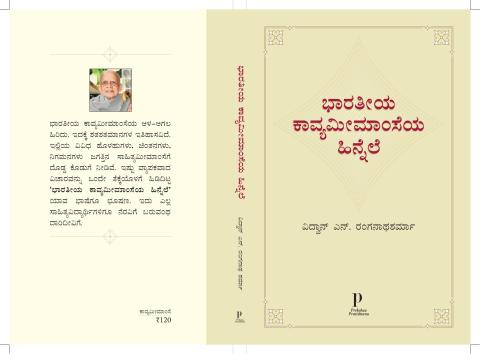
Bharatiya Kavya-mimamseya Hinnele is a monograph on Indian Aesthetics by Mahamahopadhyaya N. Ranganatha Sharma. The book discusses the history and significance of concepts pivotal to Indian literary theory. It is equally useful to the learned and the laity.

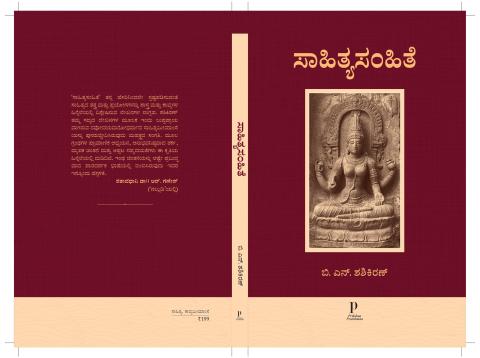
Sahitya-samhite is a collection of literary essays in Kannada. The book discusses aestheticians such as Ananda-vardhana and Rajashekhara; Sanskrit scholars such as Mena Ramakrishna Bhat, Sridhar Bhaskar Varnekar and K S Arjunwadkar; and Kannada litterateurs such as DVG, S L Bhyrappa and S R Ramaswamy. It has a foreword by Shatavadhani Dr. R Ganesh.

The Mahābhārata is the greatest epic in the world both in magnitude and profundity. A veritable cultural compendium of Bhārata-varṣa, it is a product of the creative genius of Maharṣi Kṛṣṇa-dvaipāyana Vyāsa. The epic captures the experiential wisdom of our civilization and all subsequent literary, artistic, and philosophical creations are indebted to it. To read the Mahābhārata is to...

Shiva Rama Krishna

சிவன். ராமன். கிருஷ்ணன்.
இந்திய பாரம்பரியத்தின் முப்பெரும் கதாநாயகர்கள்.
உயர் இந்தியாவில் தலைமுறைகள் பல கடந்தும் கடவுளர்களாக போற்றப்பட்டு வழிகாட்டிகளாக விளங்குபவர்கள்.
மனித ஒற்றுமை நூற்றாண்டுகால பரிணாம வளர்ச்சியின் பரிமாணம்.
தனிநபர்களாகவும், குடும்ப உறுப்பினர்களாகவும், சமுதாய பிரஜைகளாகவும் நாம் அனைவரும் பரிமளிக்கிறோம்.
சிவன் தனிமனித அடையாளமாக அமைகிறான்.
ராமன்...

ऋतुभिः सह कवयः सदैव सम्बद्धाः। विशिष्य संस्कृतकवयः। यथा हि ऋतवः प्रतिसंवत्सरं प्रतिनवतामावहन्ति मानवेषु तथैव ऋतुवर्णनान्यपि काव्यरसिकेषु कामपि विच्छित्तिमातन्वते। ऋतुकल्याणं हि सत्यमिदमेव हृदि कृत्वा प्रवृत्तम्। नगरजीवनस्य यान्त्रिकतां मान्त्रिकतां च ध्वनदिदं चम्पूकाव्यं गद्यपद्यमिश्रितमिति सुव्यक्तमेव। ऐदम्पूर्वतया प्रायः पुरीपरिसरप्रसृतानाम् ऋतूनां विलासोऽत्र प्रपञ्चितः। बेङ्गलूरुनामके...

The Art and Science of Avadhānam in Sanskrit is a definitive work on Sāhityāvadhānam, a form of Indian classical art based on multitasking, lateral thinking, and extempore versification. Dotted throughout with tasteful examples, it expounds in great detail on the theory and practice of this unique performing art. It is as much a handbook of performance as it is an anthology of well-turned...

This anthology is a revised edition of the author's 1978 classic. This series of essays, containing his original research in various fields, throws light on the socio-cultural landscape of Tamil Nadu spanning several centuries. These compelling episodes will appeal to scholars and laymen alike.
“When superstitious mediaevalists mislead the country about its judicial past, we have to...

The cultural history of a nation, unlike the customary mainstream history, has a larger time-frame and encompasses the timeless ethos of a society undergirding the course of events and vicissitudes. A major key to the understanding of a society’s unique character is an appreciation of the far-reaching contributions by outstanding personalities of certain periods – especially in the realms of...

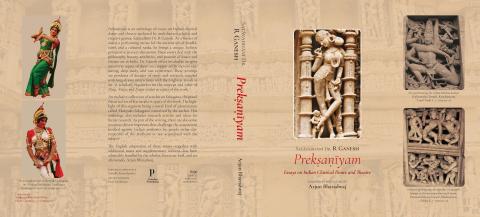
Prekṣaṇīyam is an anthology of essays on Indian classical dance and theatre authored by multifaceted scholar and creative genius, Śatāvadhānī Dr. R Ganesh. As a master of śāstra, a performing artiste (of the ancient art of Avadhānam), and a cultured rasika, he brings a unique, holistic perspective to every discussion. These essays deal with the philosophy, history, aesthetics, and practice of...

Yaugandharam

इदं किञ्चिद्यामलं काव्यं द्वयोः खण्डकाव्ययोः सङ्कलनरूपम्। रामानुरागानलं हि सीतापरित्यागाल्लक्ष्मणवियोगाच्च श्रीरामेणानुभूतं हृदयसङ्क्षोभं वर्णयति । वात्सल्यगोपालकं तु कदाचिद्भानूपरागसमये घटितं यशोदाश्रीकृष्णयोर्मेलनं वर्णयति । इदम्प्रथमतया संस्कृतसाहित्ये सम्पूर्णं काव्यं...

Vanitakavitotsavah

इदं खण्डकाव्यमान्तं मालिनीछन्दसोपनिबद्धं विलसति। मेनकाविश्वामित्रयोः समागमः, तत्फलतया शकुन्तलाया जननम्, मातापितृभ्यां त्यक्तस्य शिशोः कण्वमहर्षिणा परिपालनं चेति काव्यस्यास्येतिवृत्तसङ्क्षेपः।

Vaiphalyaphalam

इदं खण्डकाव्यमान्तं मालिनीछन्दसोपनिबद्धं विलसति। मेनकाविश्वामित्रयोः समागमः, तत्फलतया शकुन्तलाया जननम्, मातापितृभ्यां त्यक्तस्य शिशोः कण्वमहर्षिणा परिपालनं चेति काव्यस्यास्येतिवृत्तसङ्क्षेपः।

Nipunapraghunakam

इयं रचना दशसु रूपकेष्वन्यतमस्य भाणस्य निदर्शनतामुपैति। एकाङ्करूपकेऽस्मिन् शेखरकनामा चित्रोद्यमलेखकः केनापि हेतुना वियोगम् अनुभवतोश्चित्रलेखामिलिन्दकयोः समागमं सिसाधयिषुः कथामाकाशभाषणरूपेण निर्वहति।

Bharavatarastavah

अस्मिन् स्तोत्रकाव्ये भगवन्तं शिवं कविरभिष्टौति। वसन्ततिलकयोपनिबद्धस्य काव्यस्यास्य कविकृतम् उल्लाघनाभिधं व्याख्यानं च वर्तते।

Karnataka’s celebrated polymath, D V Gundappa brings together in the third volume, some character sketches of great literary savants responsible for Kannada renaissance during the first half of the twentieth century. These remarkable...

Karnataka’s celebrated polymath, D V Gundappa brings together in the second volume, episodes from the lives of remarkable exponents of classical music and dance, traditional storytellers, thespians, and connoisseurs; as well as his...

Karnataka’s celebrated polymath, D V Gundappa brings together in the first volume, episodes from the lives of great writers, poets, literary aficionados, exemplars of public life, literary scholars, noble-hearted common folk, advocates...

Evolution of Mahabharata and Other Writings on the Epic is the English translation of S R Ramaswamy's 1972 Kannada classic 'Mahabharatada Belavanige' along with seven of his essays on the great epic. It tells the riveting...

Shiva-Rama-Krishna is an English adaptation of Śatāvadhāni Dr. R Ganesh's popular lecture series on the three great...

Bharatilochana

ಮಹಾಮಾಹೇಶ್ವರ ಅಭಿನವಗುಪ್ತ ಜಗತ್ತಿನ ವಿದ್ಯಾವಲಯದಲ್ಲಿ ಮರೆಯಲಾಗದ ಹೆಸರು. ಮುಖ್ಯವಾಗಿ ಶೈವದರ್ಶನ ಮತ್ತು ಸೌಂದರ್ಯಮೀಮಾಂಸೆಗಳ ಪರಮಾಚಾರ್ಯನಾಗಿ  ಸಾವಿರ ವರ್ಷಗಳಿಂದ ಇವನು ಜ್ಞಾನಪ್ರಪಂಚವನ್ನು ಪ್ರಭಾವಿಸುತ್ತಲೇ ಇದ್ದಾನೆ. ಭರತಮುನಿಯ ನಾಟ್ಯಶಾಸ್ತ್ರವನ್ನು ಅರ್ಥಮಾಡಿಕೊಳ್ಳಲು ಇವನೊಬ್ಬನೇ ನಮಗಿರುವ ಆಲಂಬನ. ಇದೇ ರೀತಿ ರಸಧ್ವನಿಸಿದ್ಧಾಂತವನ್ನು...

Vagarthavismayasvadah

“वागर्थविस्मयास्वादः” प्रमुखतया साहित्यशास्त्रतत्त्वानि विमृशति । अत्र सौन्दर्यर्यशास्त्रीयमूलतत्त्वानि यथा रस-ध्वनि-वक्रता-औचित्यादीनि सुनिपुणं परामृष्टानि प्रतिनवे चिकित्सकप्रज्ञाप्रकाशे। तदन्तर एव संस्कृतवाङ्मयस्य सामर्थ्यसमाविष्कारोऽपि विहितः। क्वचिदिव च्छन्दोमीमांसा च...

The Best of Hiriyanna

The Best of Hiriyanna is a collection of forty-eight essays by Prof. M. Hiriyanna that sheds new light on Sanskrit Literature, Indian...

Stories Behind Verses

Stories Behind Verses is a remarkable collection of over a hundred anecdotes, each of which captures a story behind the composition of a Sanskrit verse. Collected over several years from...